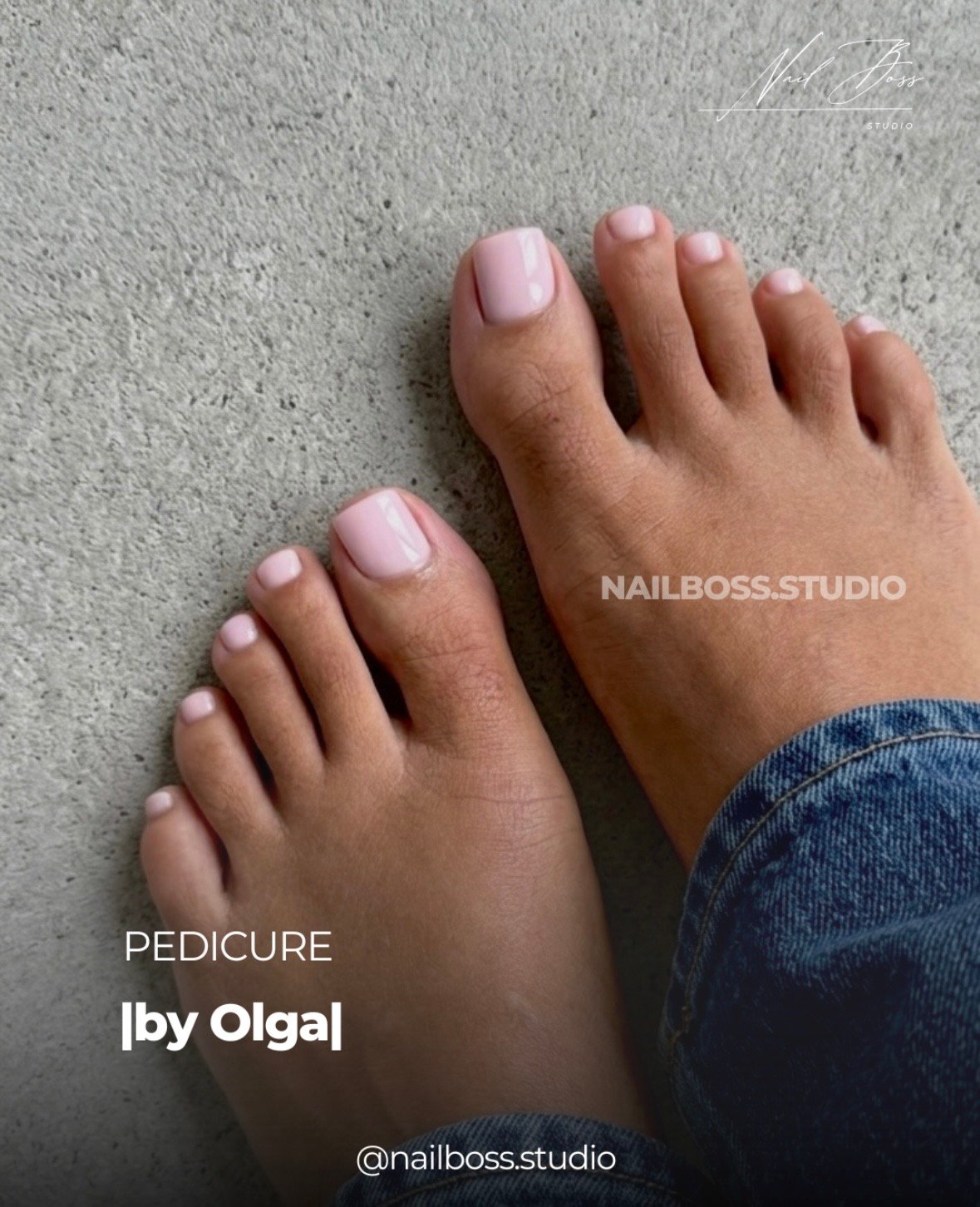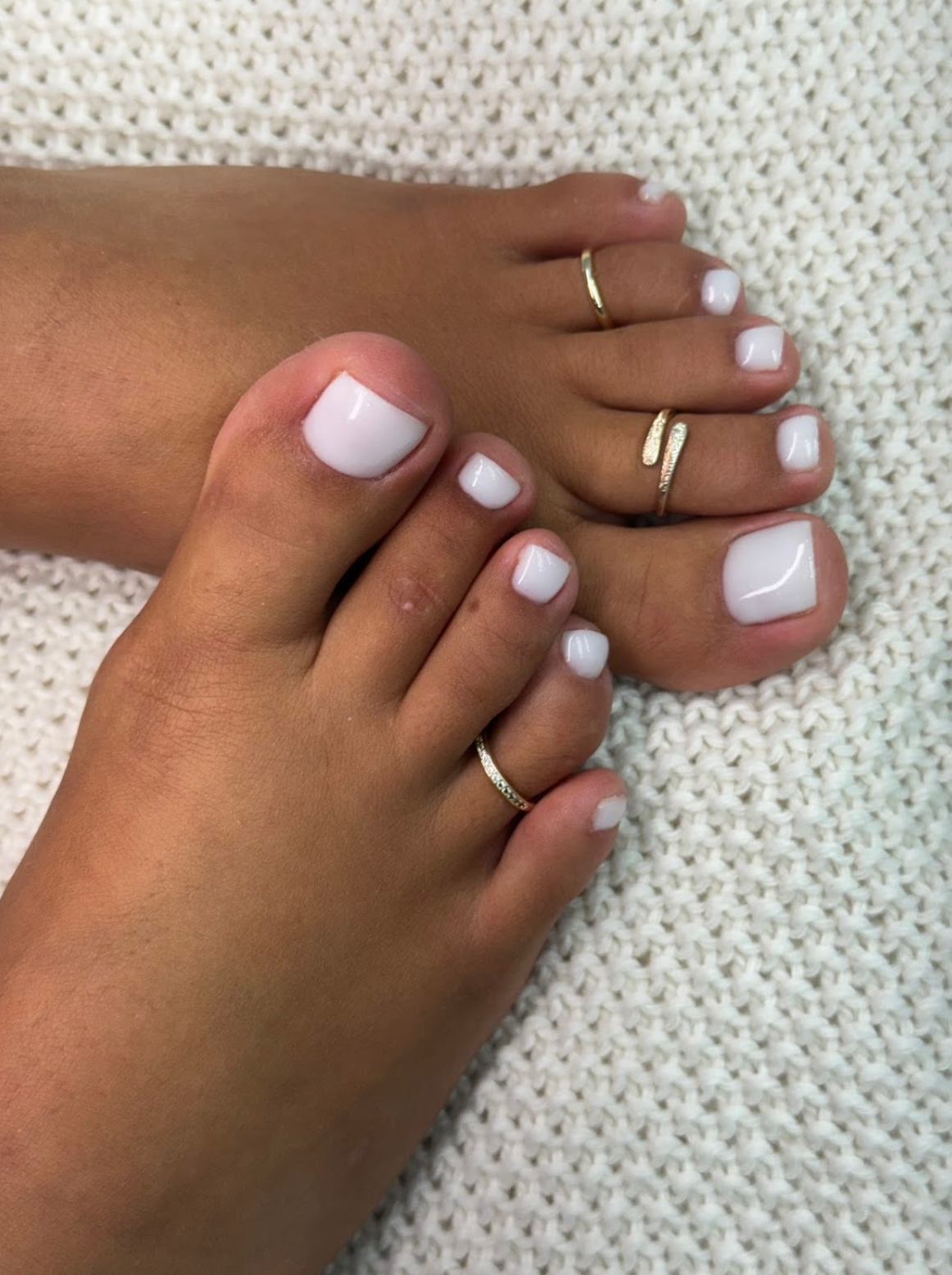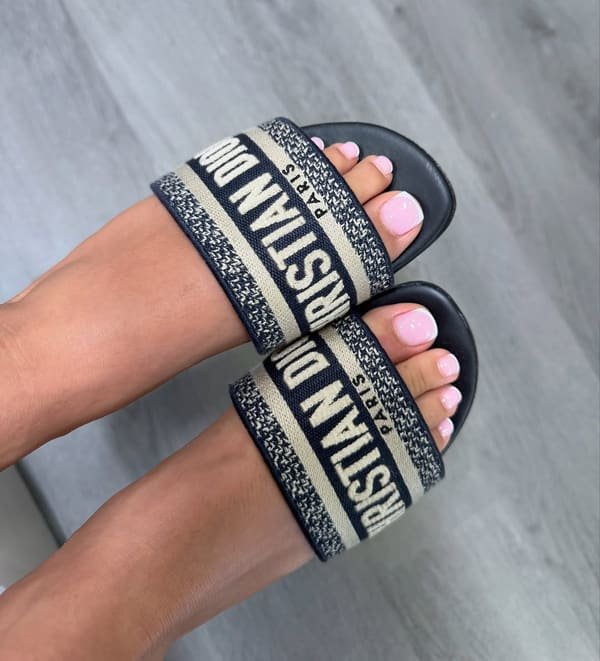

For dry pedicure nail art, a large shape on a big toenail can feel balanced when it has enough open base around it. That space is part of the design. It helps a colored circle, leaf or irregular patch remain easy to recognize at the scale of a toenail. Before requesting the reference, decide which area should attract attention and how much plain background you want visible around it.
Identify the main shape before adding detail
For dry pedicure nail art, look at the reference image and describe the largest shape in ordinary words. It might be a red oval, a dark leaf or a curved patch that crosses one corner. Separate that shape from tiny dots or highlights that sit inside it. This gives the technician a clear starting point if the reference must be resized.
If you are unsure which detail makes the image appealing, cover part of the photo with a finger. See whether the composition still works with the smaller decorations hidden. You may discover that the large color field is the part you want, with only one small mark needed to explain it. Keep that simpler version as a reference.
Compare a centered accent with an offset version
Draw the same shape twice inside a rough outline of the big toenail. Center it in one sketch and move it toward a corner in the other. Keep its size similar. The centered version leaves a border around the whole feature, while the offset version creates a larger open area on one side.
An accent moved close to the edge can feel like part of a larger pattern extending beyond the nail. If you want the complete shape to remain recognizable, keep its important contour inside the outline. Show the technician the two sketches and point to which area of open base you prefer. The sketches communicate placement without needing precise measurements.
Choose the base to support the accent
In dry pedicure nail art, a sheer base gives the open area a natural appearance, while opaque beige, cream or pink creates a more uniform background. Put the accent color beside the possible bases and look at the pair from a comfortable standing distance. Strong color contrast may allow a simpler shape to stay clear.
A soft taupe accent on pale pink might need a slightly larger outline to read, whereas a dark shape on cream can remain easy to spot with more open background. If you want a quiet effect, select close colors and accept that the detail will be more visible nearby. The guide to center and edge placement provides another way to compare the layout.
Decide what happens on the smaller toes
Plain smaller toenails can repeat the base color and leave the big-toe accent as the main feature. You can also repeat one color from the accent as a solid. Hold those choices beside the sketch so you see the whole foot as a composition. A small mark on another toe should have enough room to read at its own scale.
For example, a terracotta circle on a cream big toe could pair with cream on all the smaller toes. Using terracotta there makes the stronger color more prominent across the set. Choose which version matches the feeling you want in sandals. Tell the technician whether the second foot should mirror the placement or repeat it in the same direction.
Send a complete dry pedicure nail art brief
Your note should name the base, the accent color, the placement and how the smaller toes will look. Choose the appropriate care scope from the dry pedicure service menu and ask how much separate design time the accent requires. Attach the full reference and the sketch that shows the space you want around the shape. Mention any old product and ask what design time should be reserved with the main pedicure.
At the appointment, check one large accent before it is repeated on the other foot. Look at the border around the shape and the direction it faces. If the reference feels crowded at your current nail length, ask whether reducing the internal detail or moving the shape gives you more of the open base you wanted. Keep the two feet visible in your final reference. A shape placed toward the inner edge on one foot can point a different way when repeated on the other. Confirming the overall pair helps the placement feel deliberate when both feet are together.
Nail Boss Studio Tampa
Plan your next Tampa pedicure
Compare the studio’s service options and share your current product, preferred finish and any design request when booking.